Self-Love & Worthiness Meditations: 7-Day Guided Calm
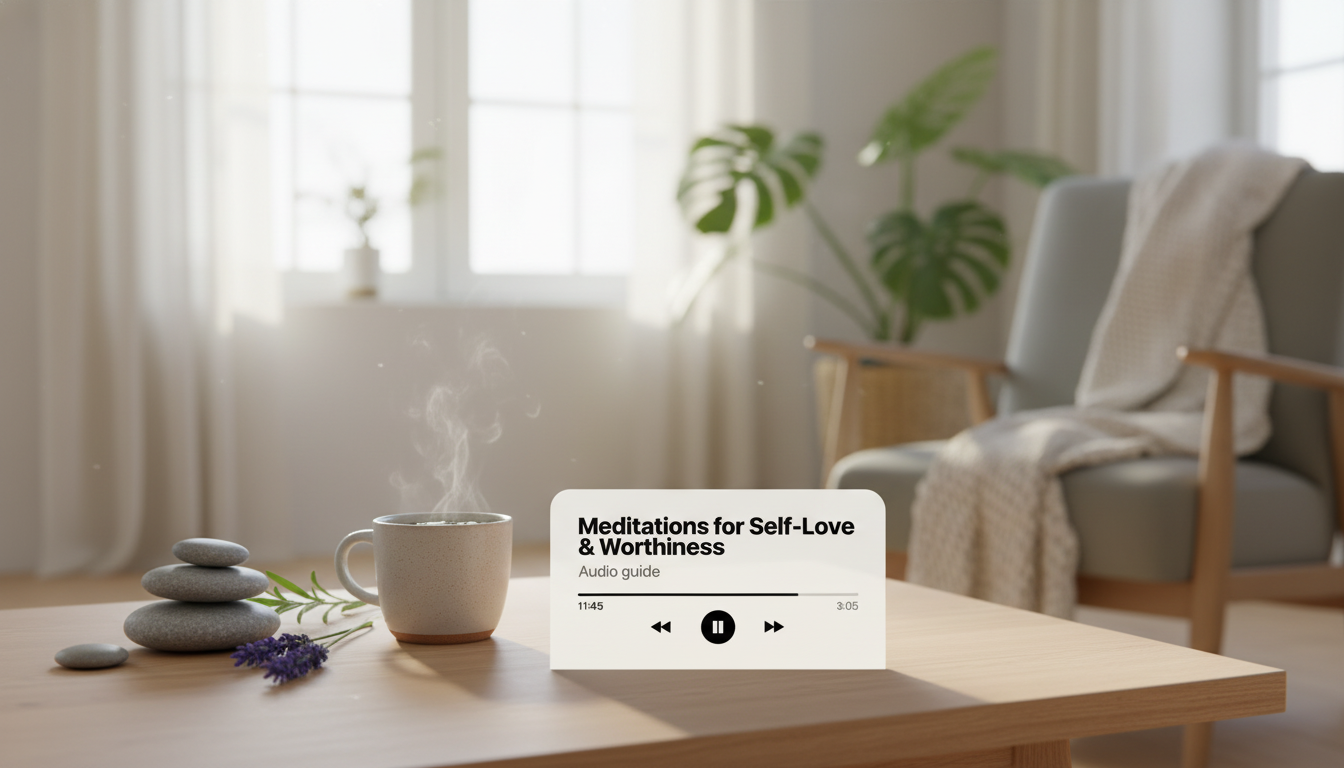
Meditations for Self-Love & Worthiness: Guided Audio Practices for Confidence, Calm, and Inner Healing
Feeling worthy isn’t something to “earn” through productivity or perfection. It can be trained as a steady inner skill—through repetition, gentleness, and nervous-system-friendly practices. Guided audio meditations can make that training easier by giving your mind a clear track to follow, especially on days when self-criticism gets loud or emotions feel close to the surface.
When practiced consistently, self-love work often looks less like constant positivity and more like a reliable ability to come back to yourself: to pause, breathe, and respond with respect. Research-backed mindfulness approaches are widely used for stress reduction and emotional regulation (see the American Psychological Association overview and NCCIH guidance on meditation and mindfulness), and self-compassion skills can help soften harsh inner talk over time (the Greater Good Science Center is a helpful starting point).
What self-love and worthiness can look like in daily life
Self-love isn’t a single mood—it’s a set of repeatable behaviors and inner responses. As it strengthens, it often shows up in small, practical ways that add up.
- More stable self-respect: setting boundaries without spiraling into guilt or over-explaining.
- A kinder inner voice: noticing self-criticism early and responding with supportive language.
- Confidence that feels grounded: taking action while allowing nervousness to exist.
- Emotional recovery: returning to center after conflict, rejection, or self-doubt.
- A calmer body: recognizing stress cues (tight chest, shallow breathing) and using tools to settle.
How guided meditation, affirmations, and mindfulness support inner healing
Different practice styles support different “layers” of healing—attention, nervous system regulation, and self-talk. Blending them creates a more complete toolkit than relying on one approach alone.
- Guided meditation provides structure when the mind feels busy, anxious, or stuck in loops.
- Mindfulness trains non-judgmental awareness—helpful for catching shame and self-criticism before they escalate.
- Affirmations can reshape habitual self-talk when paired with emotion and repetition (rather than forced positivity).
- Breath and body-based attention can reduce stress arousal, making it easier to access self-compassion in the moment.
- Consistency matters more than duration: shorter, regular sessions often create better results than occasional long sessions.
What’s included in the “Meditations for Self-Love & Worthiness” audio course
This kind of guided audio course is designed to strengthen self-love, worthiness, confidence, calm, and emotional steadiness through simple, repeatable practices. Sessions commonly blend meditation guidance with mindfulness cues and affirmation-style language—so you’re not just “thinking positive,” you’re building a felt sense of safety and self-trust.
It can be especially supportive if you recognize patterns like self-doubt, people-pleasing, perfectionism, or overthinking. The format is also flexible: it can fit into mornings, evenings, short breaks between tasks, or winding down before sleep. Beginners benefit from clear direction, and experienced meditators often appreciate having a focused theme to return to.
Quick overview: how different practice styles can help
| Practice style | Best for | When to use |
|---|---|---|
| Guided meditation | Settling the mind and staying on track | When focus feels difficult or emotions are intense |
| Mindfulness check-in | Noticing thoughts and sensations without spiraling | During stress, transitions, or midday resets |
| Affirmations | Rebuilding supportive self-talk and confidence | After negative self-talk, before challenging situations |
A 7-day gentle routine to build worthiness and calm
If you want momentum without pressure, try a one-week “minimum effective dose” plan. Keep it light: the goal is to build trust through repetition, not to perform meditation perfectly.
| Day | Time | Focus | One sentence intention |
|---|---|---|---|
| 1 | 5–10 min | Grounding | My body can settle here, one breath at a time. |
| 2 | 8–12 min | Self-compassion | I can treat myself with the same care I offer others. |
| 3 | 5–10 min | Affirmations | It is safe to speak to myself kindly. |
| 4 | 10–15 min | Confidence | I can act with courage even if I feel nervous. |
| 5 | 10–15 min | Inner healing | I can feel this and still be okay. |
| 6 | 8–12 min | Boundaries | My needs matter, and I can honor them calmly. |
| 7 | 10 min | Integration | Small steps count, and consistency builds change. |
Making affirmations feel natural (not like pretending)
Affirmations work best when they feel emotionally believable. If a phrase triggers an instant “Nope,” it can create more inner friction than support. The fix isn’t to push harder—it’s to adjust the language so your nervous system can accept it.
Common challenges and simple adjustments
Supportive resources to strengthen your routine
- Homework Help Made Easy Toolkit for Parents – Printable Guide for Creating Study Habits, Homework Strategies & Independent Learning (great for reducing household stress and creating steadier routines).
- Modern Etiquette Micro-Course | Printable Digital Etiquette Guide | Texting, Social Media, RSVPs & Everyday Politeness Tips (helpful for clearer communication and fewer second-guessing spirals).
- Pet Travel Essentials Checklist for Safe Trips | Printable Pet Travel Planner | Road Trip & Vacation Packing List for Dogs & Cats (useful for minimizing last-minute stress when you’re on the go).
FAQ
How often should these meditations be used to notice a change?
A realistic cadence is 5–15 minutes per session, about 4–6 days per week. Some people notice a calmer body quickly, while confidence and inner-talk shifts usually build more noticeably over a few weeks of consistency.
Are affirmations helpful if self-doubt is strong?
Yes, as long as they’re “bridge” affirmations that feel believable (for example, “I’m learning to trust myself”). Pairing the phrase with slow breathing or a hand-on-heart gesture often helps it land without feeling like forced positivity.
Can this be used for anxiety and stress-related tension?
These practices can support calm, grounding, and emotional regulation, which many people find helpful for anxiety and stress tension. If symptoms are intense or persistent, it’s important to seek professional support; guided practices can be a complement, not a substitute for care.















Leave a comment