Make Homework Easier: Routines, Focus & Independence
What Makes Homework Feel Hard (and What Actually Helps)
Homework can look simple on paper, yet feel heavy after a full school day. The most common friction points aren’t about intelligence—they’re about conditions: unclear instructions, weak planning skills, attention drift, perfectionism, and plain old fatigue.
A helpful first step is separating the real problem:
- Content confusion: your child doesn’t understand the material and needs teaching, examples, or clarification.
- Skill confusion: your child understands the content but struggles to start, plan, stay focused, or finish—this calls for structure like checklists, time blocks, and a clear “done” routine.
When the process is consistent, homework becomes less of a nightly negotiation. Aim for a repeatable routine over perfect performance. To make starting easier, try a brief “start-up script” your child can repeat:
- Confirm the assignment (what, how many, due when).
- Gather materials before sitting down to work.
- Estimate time (best guess is fine).
- Choose the first task (one subject, one page, one problem).
Set Up a Homework Routine That Kids Can Follow
Routines work best when they’re anchored to something that already happens every day. A predictable start window—right after snack and a short decompression break, for example—reduces resistance because kids know what comes next.
Keep sessions short and defined. Timed work blocks with planned breaks tend to beat open-ended marathons, especially for kids who get overwhelmed or distracted. Finally, define “done” in a way that prevents the classic morning scramble: finished, checked, packed, and ready to turn in.
Example Homework Routine (Adjust by Age and Load)
| Step | Time | What to Do | Parent Role |
|---|---|---|---|
| Reset | 5 min | Snack/water, bathroom, quick stretch | Keep it short; avoid screens |
| Plan | 5 min | Read directions, list tasks, choose first | Ask guiding questions; no solving yet |
| Work Block 1 | 15–25 min | Single subject focus | Stay nearby if needed; reduce interruptions |
| Break | 5 min | Move, refill water | No high-dopamine distractions |
| Work Block 2 | 15–25 min | Next task; finish priority items | Check for understanding, not answers |
| Review & Pack | 5–10 min | Self-check, name/date, put in backpack | Confirm “done” definition is met |
Create a Workspace That Supports Focus (Without Overhauling the House)
A great homework setup doesn’t require a new desk or a Pinterest-worthy corner. It needs consistency and low friction. Pick one primary spot with a stable surface, decent lighting, and a comfortable chair. Keep clutter to a minimum so the brain has fewer “side quests” to chase.
Next, make supplies visible and easy to reach: pencils, paper, charger, calculator, headphones, sticky notes, and any class-specific tools. A small bin for school materials can eliminate repeated trips around the house—and a single “homework folder” keeps papers from disappearing between the backpack and the table.
Distraction management matters more than most parents expect. If possible, silence notifications and keep the phone outside the workspace. For older students working on a computer, a website blocker can help during timed work blocks. For more research-backed ideas on learning habits and motivation, browse resources from the American Psychological Association and Edutopia.
Homework Strategies That Build Independence (Not Dependence)
The goal is support that gradually transfers ownership to your child. A simple rule that works across ages is “Ask 3 Before Me”:
- Check the directions again.
- Look in notes/textbook (or the example from class).
- Try one quick example or attempt (even if it’s imperfect).
When Kids Avoid Homework: Gentle Fixes for Common Patterns
- Overwhelm: break work into micro-steps (open notebook, write name/date, do the first question). Momentum beats motivation.
- Perfectionism: set a “good enough” target and a time cap. Emphasize learning and completion over flawless output.
- Low stamina: shorten work blocks and increase movement breaks, then build up gradually.
- Skill gaps: pinpoint the sticking point (reading the question, organizing writing, math facts). If the same snag repeats, share specifics with the teacher so support can match the need. Harvard’s learning and child-development insights can be a helpful starting point at Harvard Graduate School of Education.
- Power struggles: offer limited choices (start with math or reading; desk or kitchen table) while keeping the routine itself non-negotiable.
Printable Tools That Turn Good Intentions Into Daily Habits
A Ready-to-Use Option for Parents Who Want Structure Fast
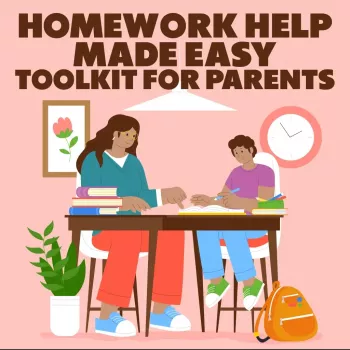
When time is tight, a compact toolkit can save energy by bundling routine pages, checklists, and independence-building prompts in one place. The Homework Help Made Easy Toolkit for Parents – Printable Guide for Creating Study Habits, Homework Strategies & Independent Learning is designed for quick setup—ideal for families who want a repeatable system without reinventing it each week.
For older kids, organization and communication skills matter beyond schoolwork too. If you’re also building everyday responsibility (texts, RSVPs, social media tone), the Modern Etiquette Micro-Course | Printable Digital Etiquette Guide | Texting, Social Media, RSVPs & Everyday Politeness Tips can complement home routines with practical, age-appropriate guidance.
FAQ
How long should a homework session be?
Most kids do best with timed work blocks (often 15–25 minutes) separated by short breaks, rather than one long stretch. The right total length depends on age and workload, but a consistent start time and a clear “review & pack” finish step usually matter more than the exact minutes.
Should parents correct mistakes on homework?
It’s usually better to guide with questions and check for completeness, directions, and obvious errors than to rewrite answers. If your child is consistently confused, note the specific sticking point and reach out to the teacher so class support matches what’s happening at home.
What if a child refuses to work without a parent sitting next to them?
Use gradual fading: start nearby, then increase distance or do short check-ins (“I’ll be at the counter; show me after 5 minutes”). Visual checklists and praise for independent minutes help build confidence until your child can work on their own for longer stretches.















Leave a comment