Empowered Budgeting Toolkit: Monthly Plan, Track & Grow

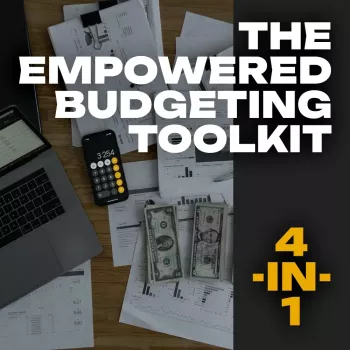
The Empowered Budgeting Toolkit: A 4-in-1 Money System for Monthly Clarity and Wealth-Building
The Empowered Budgeting Toolkit bundles practical planning tools with an Excel guide, savings and wealth frameworks, and guided affirmations designed to support consistent money habits. The goal is simple: turn “tracking” into a repeatable monthly routine—so bills, goals, and progress feel easier to manage, even when life gets busy.
What this toolkit helps solve
- Monthly money uncertainty: clearer visibility into income, fixed bills, and variable spending
- Inconsistent saving: a system for defining targets, automating actions, and measuring progress
- Budget fatigue: prompts and routines that reduce decision overload during the month
- Mindset gaps: guided affirmations to reinforce the identity and behaviors behind sustainable financial change
What’s included in the 4-in-1 bundle
Instead of relying on motivation, the toolkit leans on structure. Each component does a specific job: plan, track, adjust, and keep you consistent.
- Budget planner materials to map income, bills, variable expenses, and sinking funds
- Excel guide to streamline calculations, track categories, and review trends
- Monthly expense and savings structure to keep the plan realistic and repeatable
- Wealth strategies and guided affirmations designed to support long-term consistency
Bundle components at a glance
| Component | Primary use | Best time to use it |
|---|---|---|
| Budget planner | Plan the month and assign every dollar a job | Before the month begins + weekly check-ins |
| Excel guide | Track spending and see totals without manual math | After transactions + end-of-week review |
| Savings framework | Set targets, create sinking funds, and prioritize goals | During monthly planning + payday routine |
| Wealth strategies + affirmations | Reinforce habits, reduce self-sabotage, and stay consistent | Daily or during planning sessions |
How to set up the budget planner for a clean start
A “clean start” doesn’t require a perfect month—it requires a plan you can actually follow. Use this setup flow to avoid overcomplicating the first draft.
- List reliable income sources and pay dates (use conservative estimates when income varies).
- Separate fixed obligations from flexible categories (rent/mortgage, insurance, subscriptions vs. groceries, fuel, dining, personal).
- Add “true expenses” as sinking funds (car repairs, annual fees, gifts, medical, home maintenance) so they stop ambushing your budget.
- Decide on 1–3 priority goals for the month (emergency fund, debt payoff, a specific sinking fund).
- Create a small buffer line item so one surprise doesn’t blow up the plan.
Using the Excel guide to track spending without overwhelm
Tracking is where many budgets fall apart—not because it’s “hard,” but because it’s too detailed to sustain. The Excel guide helps reduce friction by making the math automatic and the insights quick.
- Start with a short category list; expand only when categories are consistently too broad.
- Pick one tracking rhythm: daily entry (fast), twice weekly (balanced), or weekly (simple).
- Use consistent labels so trends are visible month-to-month.
- Review planned vs. actual weekly and make one adjustment instead of rewriting the whole plan.
- Add a notes area for exceptions (unexpected travel, medical costs, seasonal spikes) to improve next month’s estimates.
A monthly workflow that actually sticks
Consistency comes from routines that fit into real life. The toolkit’s workflow is designed to be short, repeatable, and decision-light.
- Monthly planning session (30–45 minutes): set targets, fund bills, decide spending limits, and schedule check-ins.
- Payday routine (10–15 minutes): allocate to bills first, then savings goals, then discretionary spending.
- Weekly check-in (10 minutes): reconcile totals, identify one category to tighten, and confirm upcoming due dates.
- Month-end review (20 minutes): capture wins, note friction points, and set next month’s top priorities.
- Rule of simplicity: only track what will change behavior—skip details that don’t lead to decisions.
Monthly expense + savings structure: turning goals into automatic actions
The difference between “wanting to save” and saving consistently is a clear rule for what happens when money arrives.
- Start with an emergency fund target that matches reality: even $10–$50 weekly builds momentum.
- Use sinking funds to prevent “surprise” expenses from becoming debt.
- If savings is inconsistent, use percentage-based saving on payday instead of a fixed monthly number.
- Choose one focus at a time: build a small cushion first, then tackle debt or investing with fewer setbacks.
- Set trigger rules (example: “If dining hits 80% by day 20, switch to pantry meals for the rest of the month”).
Wealth strategies for long-term progress
For additional reputable money-management guidance, browse the Consumer Financial Protection Bureau (CFPB) budgeting resources and the Federal Trade Commission (FTC) managing your money hub.
Guided affirmations for wealth: making consistency easier
Who this bundle fits best
Common pitfalls and quick fixes
More practical printable toolkits you may like
- Homework Help Made Easy Toolkit for Parents – Printable Guide for Creating Study Habits, Homework Strategies & Independent Learning
- Modern Etiquette Micro-Course | Printable Digital Etiquette Guide | Texting, Social Media, RSVPs & Everyday Politeness Tips
- Pet Travel Essentials Checklist for Safe Trips | Printable Pet Travel Planner | Road Trip & Vacation Packing List for Dogs & Cats
FAQ
Is this bundle beginner-friendly if budgeting feels overwhelming?
Yes—because it reduces decisions into a repeatable routine: plan once, track simply, and adjust weekly. Starting with a short category list and a single weekly check-in helps you build consistency without getting buried in details.
How much time does a monthly routine take with the planner and Excel guide?
Most months take about 30–45 minutes to plan, 10–15 minutes each payday, 10 minutes for a weekly check-in, and around 20 minutes for a month-end review. Consistency matters more than perfect tracking, so keep the routine small enough to repeat.
Can affirmations really help with spending and saving habits?
They can when used as a cue for a specific behavior, such as logging purchases, checking category totals, or pausing before a non-essential buy. Over time, that pairing reinforces calmer decision-making and improves follow-through.















Leave a comment